SUMMARY
Abstract
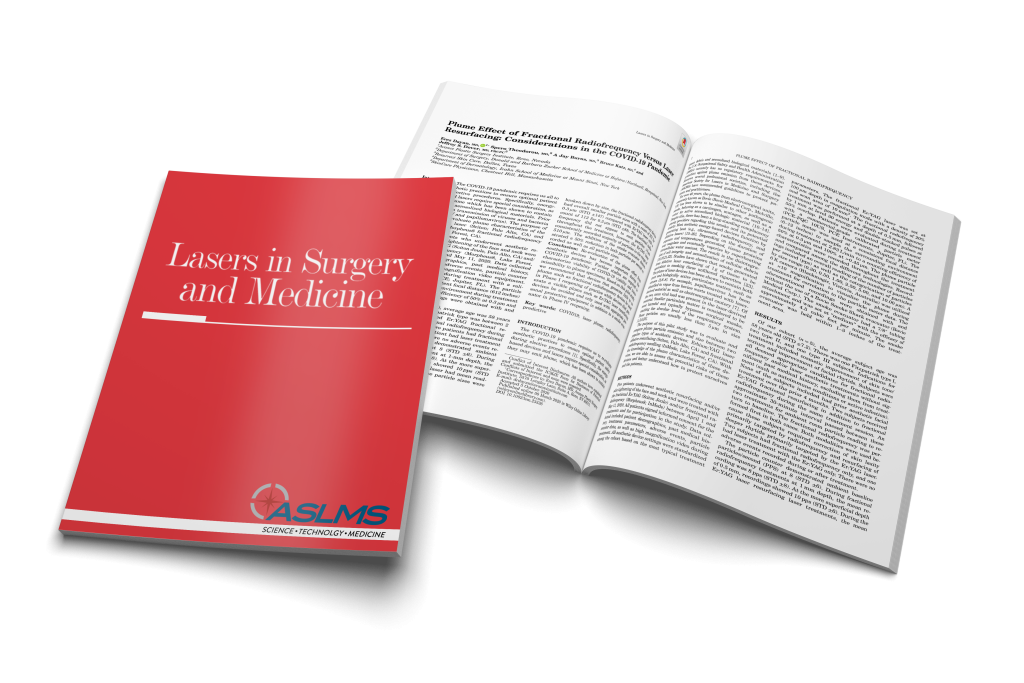
This pilot study investigated the plume effect of energy-based devices during aesthetic treatments in the context of the COVID-19 pandemic. Five patients received resurfacing and/or skin tightening with either the Er:YAG laser or the Morpheus8 fractional radiofrequency device. Using particle counters and high-resolution video, researchers measured aerosolized plume at different treatment depths with and without smoke evacuation. Results showed that Morpheus8 RF produced minimal plume (8–10 pps), while the Er:YAG laser generated significantly higher counts (44 pps). Importantly, Morpheus8 emitted smaller particles (<0.3 µm) and none above 5 µm, unlike the laser.
Conclusion
Fractional RF (Morpheus8) demonstrated a markedly lower plume output compared to Er:YAG laser resurfacing, reducing potential viral and bacterial transmission risk. The authors recommend prioritizing devices like Morpheus8 during early reopening phases of pandemic-era practice, while reserving laser resurfacing for later stages with enhanced PPE and smoke evacuation protocols. This supports fractional RF as a safer alternative for aesthetic resurfacing treatments in the COVID-19 context.
TOPICS COVERED
- Evaluation of plume generated by Morpheus8 fractional RF vs. Er:YAG laser
- Use of particle counters and video analysis during treatments
- Plume particle size and count differences between RF and laser
- Role of smoke evacuators in reducing plume emission
- Clinical implications for device safety during the COVID-19 pandemic
- Recommendations for practice reopening with Morpheus8 prioritized for resurfacing